
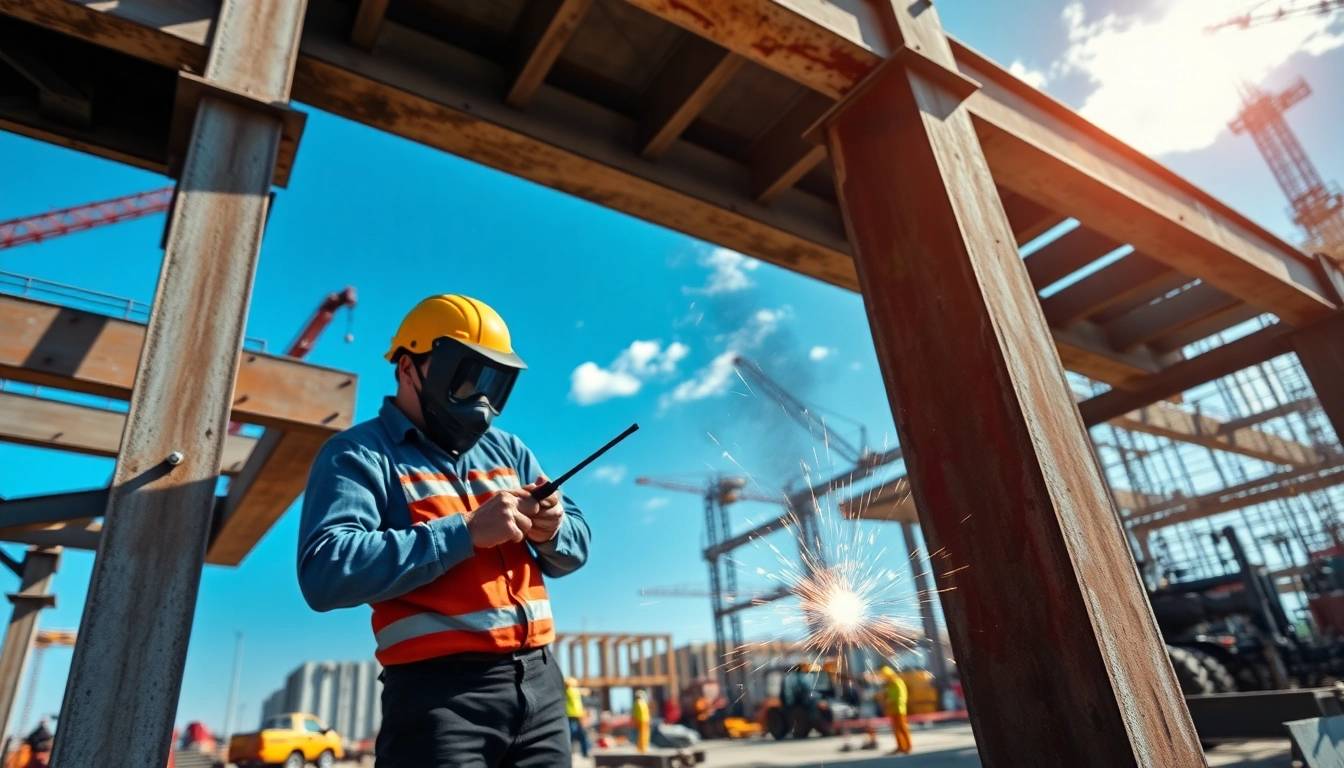
Understanding the Basics of Structural Steel Welding
Definition and Importance of Structural Steel Welding
Structural steel welding is a critical process in the construction and manufacturing sectors, wherein steel components are fused together to form durable, robust structures. This practice not only strengthens buildings, bridges, and other infrastructures but also ensures that they can withstand various load conditions. Structural steel welding plays a vital role in maintaining safety standards and longevity in construction projects, making it an indispensable skill in the industry. Mastering structural steel welding encompasses understanding the fundamental concepts, techniques, and applications associated with this technical art.
Common Techniques Used in Structural Steel Welding
Welding techniques can vary significantly based on project requirements and material specifications. The most prevalent methods employed in structural steel welding include:
- MIG Welding (Metal Inert Gas): Also known as Gas Metal Arc Welding (GMAW), this technique utilizes a continuous wire feed and an inert gas shield to protect the weld area from oxidation. It is favored for its speed and versatility in welding thin to moderately thick steel.
- TIG Welding (Tungsten Inert Gas): This process, or Gas Tungsten Arc Welding (GTAW), employs a non-consumable tungsten electrode, producing a high-quality weld that is typically used for thinner materials or applications demanding precision.
- Stick Welding (Shielded Metal Arc Welding): This traditional method uses an electrode coated in flux, allowing welders to create strong joints in various steel thicknesses. It is popular for outdoor use due to its resilience to wind and contaminants.
- Flux-Cored Arc Welding (FCAW): Similar to MIG welding, FCAW uses a continuous wire fed through the welding gun; however, it contains a flux core that produces shielding gas as the electrode melts, providing a robust weld suitable for thicker sections and outdoor environments.
Safety Standards and Regulations in Structural Steel Welding
Safety plays an essential role in structural steel welding due to the potential hazards involved, including exposure to harmful fumes, electric shock, and physical injuries. Complying with established safety standards, such as those outlined by the American Welding Society (AWS) and Occupational Safety and Health Administration (OSHA), is crucial for protecting welders and ensuring quality work. Key safety practices include:
- Proper use of personal protective equipment (PPE) such as welding helmets, gloves, and flame-resistant clothing.
- Maintaining a clean and organized workspace to reduce distractions and prevent accidents.
- Regular inspection and maintenance of welding equipment to ensure it functions safely and effectively.
- Understanding material safety data sheets (MSDS) for all materials involved in the welding process to mitigate health risks.
Essential Tools and Equipment for Structural Steel Welding
Overview of Welding Machines and Their Uses
The welding machine is the heart of the structural steel welding process. Selecting the right machine—based on the type of welding being performed—can significantly impact the quality of the weld. Commonly used welding machines include:
- MIG Welders: Versatile devices ideal for metal of varying thickness, often equipped with features that allow for automatic feeding of wire.
- TIG Welders: Precision-focused machines suitable for thinner materials, requiring a higher skill level due to their operational intricacies.
- Stick Welders: Known for their portability and simplicity, these machines work well in outdoor environments and can handle various electrode sizes.
- Multiprocess Welders: These multi-functional devices enable users to perform MIG, TIG, and stick welding, adding versatility to the welding operations.
Personal Protective Equipment for Safe Welding
Keeping welding personnel safe is paramount; therefore, utilizing appropriate personal protective equipment is non-negotiable. Essential PPE for welders includes:
- Welding Helmets: Designed to protect the eyes and face from bright arcs, sparks, and heat, with auto-darkening features for enhanced visibility.
- Gloves: Heat-resistant gloves protect the hands from burns and provide support while handling equipment.
- Protective Clothing: Non-flammable clothing, typically made of leather or other flame-resistant materials, shields the body from sparks and heat.
- Respirators: Essential in preventing inhalation of toxic fumes and particulates created during the welding process.
Maintenance of Tools and Equipment in Structural Steel Welding
Regular maintenance of welding equipment is critical to ensure optimal performance and longevity. Essential maintenance practices include:
- Routine cleaning of welding tips and nozzles to ensure a smooth wire feed and proper gas shielding.
- Regular checks for leaks in gas lines and hoses, ensuring to replace worn or damaged parts promptly.
- Periodic inspections of electrical connections and cables to avoid short circuits or equipment failure.
- Calibrating machines according to manufacturer specifications to ensure precision in weld quality.
Selecting the Right Welding Techniques for Structural Steel Welding
Comparing MIG, TIG, and Stick Welding Methods
Selecting the appropriate welding technique largely hinges on specific project requirements. Each method offers unique advantages:
- MIG Welding: Ideal for high-speed applications and thicker materials, it ensures minimal spatter and a clean finish but may require more inert gas, thereby increasing costs.
- TIG Welding: Superior for thin materials requiring precision, it produces less distortion while allowing for diverse joint types but necessitates extensive skill and slower speeds.
- Stick Welding: Known for versatility in outdoor conditions, it can handle rusted or dirty materials well but generates more smoke and spatter compared to other methods, requiring more post-weld cleanup.
Factors Affecting the Selection of Welding Techniques
A variety of factors can influence the choice of structural steel welding techniques, including:
- Material Type: Different steels and alloys may react differently under heat.
- Project Size: Larger projects often favor methods that offer speed and efficiency.
- Welding Environment: Outdoor projects may necessitate more robust methods capable of withstanding varying weather conditions.
- Skill Level: The welder’s expertise may determine the choice of technique, especially for more complex or delicate tasks.
Best Practices for Effective Structural Steel Welding
Implementing best practices can significantly enhance weld quality and structural integrity. Key strategies include:
- Thorough cleaning of materials to remove contaminants before welding, thereby improving joint quality.
- Properly fitting joints and alignments to minimize warping and enhance strength.
- Using the correct filler materials that match or exceed the properties of the base materials being joined.
- Post-welding inspections and testing to ensure weld integrity and compliance with standards.
Common Challenges in Structural Steel Welding and Solutions
Identifying Common Welding Defects
Despite meticulous preparation and execution, welds can exhibit defects that compromise structural integrity. Common issues include:
- Porosity: Gas pockets trapped in the weld, often caused by contaminants or inadequate shielding gas.
- Cracking: Stress-induced fractures that can arise from improper cooling rates or misalignment.
- Inadequate Penetration: Insufficient fusion between the base metal and the weld, often leading to weak joints.
- Spatter: Unwanted metal droplets formed during welding that can mar finished surfaces.
Effective Techniques for Overcoming Welding Issues
Addressing welding defects typically involves specific corrective measures. Strategies include:
- Controlling heat input to minimize cracking by adjusting welding speed and technique.
- Improving cleanliness of base metals and using proper shielding gas compositions to prevent porosity.
- Post-weld treatments like stress-relief annealing to enhance structural properties and reduce residual stresses.
- Implementing proper welding procedures and techniques to ensure quality penetration and fusion.
The Role of Inspection and Quality Control Measures
Inspection and quality control are paramount in ensuring the safety and reliability of welded structures. Utilizing techniques such as ultrasonic testing (UT) and radiographic testing (RT) helps in identifying hidden defects. Regular audits, adherence to welding codes, and implementing a robust quality management system can elevate the standards of structural steel welding operations.
Advancements and Future Trends in Structural Steel Welding
Emerging Technologies in Welding Processes
Innovations in welding technologies are revolutionizing structural steel welding. Advancements include:
- Laser Welding: This technique uses high-intensity laser beams to create precise welds with minimal heat input, leading to reduced distortion and enhanced strength.
- Plasma Arc Welding: Offers high levels of control and is effective for thin materials, enabling users to achieve high-quality welds with fewer imperfections.
- Automated Welding Systems: Robotics are increasingly employed for large-scale operations, improving consistency and reducing human error.
The Impact of Automation in Structural Steel Welding
Automation has dramatically enhanced productivity and consistency in structural steel welding. CNC (Computer Numerical Control) machinery enables precise control over welding parameters, significantly reducing human error and expediting processes. Efficiency gains and cost reductions achievable through automation can lead to faster project completion times and improved weld quality.
Sustainability Practices in Structural Steel Welding
With the growing emphasis on sustainability within construction industries, the introduction of eco-friendly practices in structural steel welding is becoming increasingly vital. Techniques such as using recycled steel, minimizing waste through efficient process design, and optimizing energy consumption during welding can significantly reduce the environmental footprint of welding projects. Innovations in materials and processes will continue to reshape the landscape of structural steel welding, aligning it with global sustainability goals.
