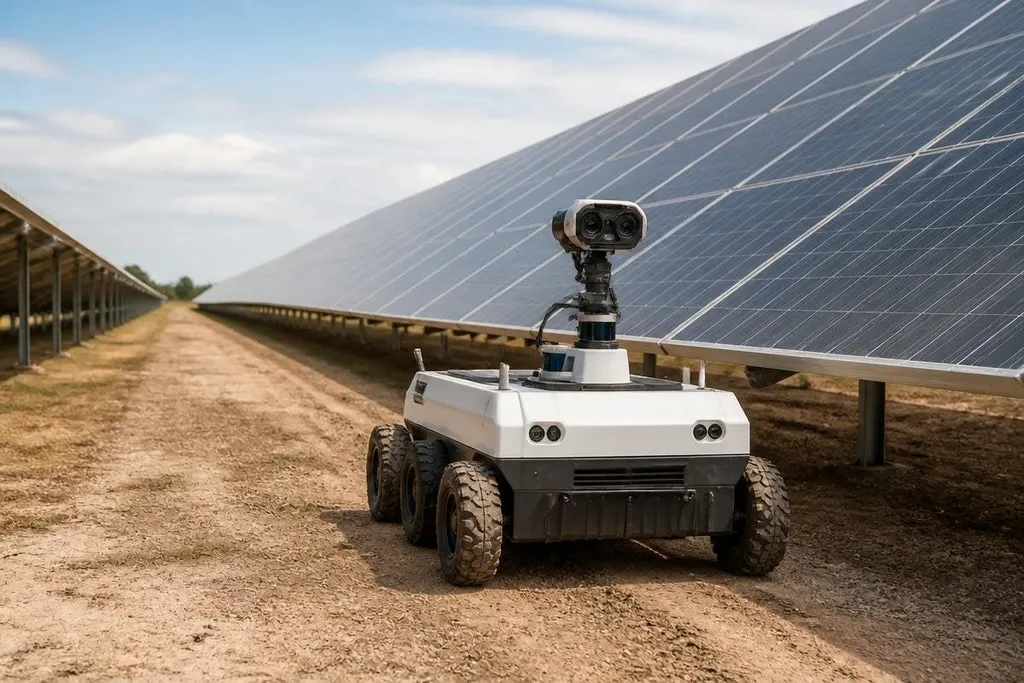
A solar farm can cover several square kilometers, and its panels collect dust, heat, and weather damage every day. AI helps maintenance robots decide where to drive, what to inspect, and which faults need a human check. The value comes from fewer wasted trips and better records, not from giving a robot a vague promise of autonomy.
- Cameras can spot dirt, cracks, hot cells, and damaged frames.
- Software can plan routes around panel rows and changing ground conditions.
- Human teams still set safety rules and handle repairs the robot can't verify.
What the robot sees
Maintenance robots combine cameras with wheel sensors, satellite navigation, or other location systems. Computer vision reads those images and compares a panel's current condition with earlier scans, then flags changes.
The change might be dirt, a crack, or a hotter section. Thermal cameras find heat differences that normal cameras miss. A person still needs to check whether a fault comes from the panel, a cable, or the sensor.
The data sets the limit. Glare, shadows, dust on the camera, and panels covered by snow can all confuse image software. Training from one site may also need new data before it works well on another site with different panel layouts and weather.
How AI plans the work
Route planning turns inspection into a scheduling problem. The robot needs to reach each row, avoid service roads and drainage channels, return for charging, and leave space for workers or other vehicles.
AI can rank inspection points by signs of damage, recent weather, or a change from the last scan. That gives a crew a work list instead of a folder full of images. The system can also send the robot back to a location when a first scan is unclear.
This matters most on large sites, where a worker may spend much of a shift driving between rows. On a small solar farm, a technician may inspect the whole site on foot in one visit. The number of panels, travel distance, and repair process decide the value.
The site size, panel layout, test date, and measured result belong beside any claim about solar farm automation. Solar farm robotics reports put those details in view before the next section separates cleaning, inspection, and repair.
Cleaning, inspection, and repair are different jobs
A robot that carries a brush has a different problem from one that checks for hot cells. Cleaning needs steady contact with the panel surface, control over dust, and a route that avoids cables and frames. Inspection needs stable images, repeatable camera distance, and enough light to compare scans.
Repair is harder again. Finding a damaged connector is one task. Reaching it, removing a part, fitting a replacement, and checking the result calls for force control and tools made for that panel design. Many systems can report a fault without being able to fix it.
That limit changes the business case. The system may save inspection time while leaving repair labor unchanged. I’d judge the system by the number of verified faults it finds per shift, not by how smoothly a demo robot moves between rows.
What can go wrong
Outdoor sites are rough places for machines. Uneven ground can shake cameras, rain can reduce image quality, and high heat can cut battery life or affect electronics. On a clean test row, the robot may work well, then stop when weeds cover its path or a vehicle blocks an access lane.
Safety adds another layer. The control system needs a clear stop command, safe behavior near people, and a way to report its position. The farm operator also needs records that show which rows the robot checked, when it checked them, and which findings a person confirmed.
AI can rank faults, but it shouldn't hide uncertainty. A useful report marks low-confidence findings for review instead of treating every unusual image as a repair order.
A practical buying checklist
Before you compare a solar inspection robot, check these points:
- Site fit: Confirm the robot can handle row spacing, slopes, loose ground, and the panel angle used at your site.
- Sensor proof: Ask for sample images from dust, glare, heat, and low light, not only clean daytime scans.
- Fault records: Check whether each alert includes a location, image, time, and confidence score.
- Human control: Confirm how workers stop the robot, take control, and reach it after a route error.
- Repair link: Find out who checks the alerts and how a verified fault becomes a scheduled repair.
The next useful step is a small site trial with a fixed target: compare robot findings with a technician's inspection across the same rows.
If the robot finds more verified faults without adding review work, the case for wider use becomes clear; if every alert needs a manual recheck, the software still has work to do.