
Geospatial Data and AI Shaping the Future of Analytics
Introduction to Geospatial Data and AI
The integration of geospatial data and artificial intelligence (AI) is revolutionizing the field of analytics, transforming how organizations collect, analyze, and act upon information. Geospatial data provides the spatial context necessary for understanding patterns, relationships, and trends across physical environments. When combined with AI, this data enables advanced predictive modeling, real-time decision-making, and innovative solutions across industries.
From urban planning and transportation to healthcare and environmental monitoring, AI-powered geospatial analytics is reshaping the way organizations operate, offering insights that were previously unattainable. The synergy between AI and geospatial data is driving efficiency, accuracy, and innovation at an unprecedented scale.
Role of Geospatial Data in AI Analytics
Enhancing Predictive Capabilities
Geospatial data enriches AI models by providing location-specific variables that improve predictive accuracy. Machine learning algorithms can analyze patterns in population density, infrastructure usage, traffic flows, or environmental factors to forecast trends and anticipate potential challenges.
Predictive analytics powered by geospatial AI allows organizations to optimize resources, plan proactively, and mitigate risks. For example, in urban planning, AI models can forecast traffic congestion and recommend infrastructure improvements before issues arise.
Supporting Real-Time Decision-Making
AI integration with geospatial data enables real-time decision-making by processing live inputs from sensors, GPS devices, and IoT networks. Organizations can monitor dynamic conditions, detect anomalies, and respond immediately to emerging situations.
This capability is critical in sectors such as disaster management, transportation, logistics, and public safety, where timely, location-aware decisions can save lives, reduce costs, and enhance operational efficiency.
Uncovering Hidden Insights
AI algorithms can identify complex spatial patterns and correlations that are often invisible to traditional analytical methods. By analyzing geospatial data, organizations can uncover trends in consumer behavior, environmental changes, or urban development, leading to more informed strategies and innovative solutions.
Applications of Geospatial Data and AI Analytics
Smart Cities and Urban Management
AI-powered geospatial analytics is a driving force behind smart city initiatives. By integrating data from traffic sensors, public transit systems, energy grids, and population metrics, AI platforms provide actionable insights for urban planning and resource allocation.
City authorities can use predictive models to manage congestion, optimize public transportation routes, and improve emergency response, enhancing urban efficiency and quality of life.
Transportation and Logistics
Geospatial AI enables intelligent route optimization, fleet management, and predictive maintenance. By analyzing traffic patterns, weather conditions, and vehicle locations, organizations can reduce fuel consumption, minimize delays, and improve service reliability.
Autonomous vehicles and intelligent transportation systems rely heavily on AI-driven geospatial analytics to navigate safely and efficiently, shaping the future of mobility.
Environmental Monitoring and Climate Analytics
Environmental organizations leverage AI and geospatial data to monitor ecosystems, track climate change, and assess natural resource management. Satellite imagery and sensor data feed AI models that detect anomalies, forecast environmental risks, and recommend mitigation strategies.
Predictive environmental analytics helps organizations implement proactive measures for conservation, disaster preparedness, and sustainable development.
Healthcare and Public Health
AI-powered geospatial analytics improves healthcare planning and disease prevention. By analyzing spatial patterns of disease outbreaks, healthcare accessibility, and population demographics, AI platforms enable targeted interventions and resource allocation.
Geospatial AI assists public health authorities in monitoring epidemics, optimizing emergency response, and enhancing healthcare service delivery, ultimately improving population health outcomes.
Business Intelligence and Market Analytics
Businesses use AI-driven geospatial analytics to understand market trends, customer behavior, and competitive landscapes. Spatial insights inform site selection, supply chain optimization, and marketing strategies.
Machine learning algorithms process large volumes of geospatial data to predict consumer demand, identify market opportunities, and guide strategic decision-making with greater precision.
Technologies Enabling Geospatial AI Analytics
Geographic Information Systems (GIS)
GIS platforms are essential for integrating geospatial data with AI. They facilitate the storage, management, and visualization of spatial information while providing interfaces for predictive modeling and machine learning applications.
Modern GIS tools support 3D mapping, real-time data streams, and advanced analytics, enabling organizations to extract actionable insights and enhance spatial intelligence.
Machine Learning and Deep Learning Algorithms
Machine learning and deep learning techniques process complex geospatial datasets, detecting patterns, clustering regions, and predicting outcomes. These algorithms enable AI systems to provide sophisticated analytics for urban planning, transportation, environmental monitoring, and business strategy.
Supervised, unsupervised, and reinforcement learning approaches enhance AI’s ability to generate actionable insights from geospatial data efficiently and accurately.
Cloud Computing and Big Data Analytics
Cloud platforms and big data infrastructure support the storage, processing, and analysis of massive geospatial datasets. Organizations can integrate multiple data sources, manage real-time inputs, and perform scalable analytics, providing the computational power necessary for AI-driven insights.
Remote Sensing and IoT Integration
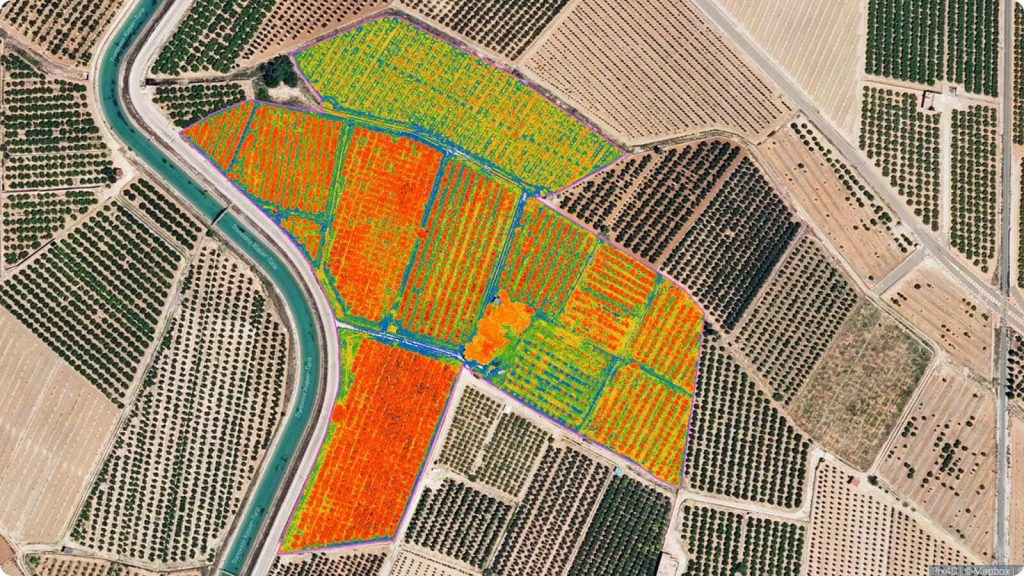
Remote sensing technologies, such as satellites and drones, provide high-resolution geospatial data for AI analysis. IoT devices embedded in infrastructure, vehicles, and environmental sensors continuously generate location-specific data, feeding AI models for real-time monitoring and predictive analytics.
Benefits of Geospatial AI Analytics
Improved Decision-Making
By combining geospatial data with AI, organizations gain enhanced situational awareness and actionable insights, enabling more informed and strategic decisions.
Operational Efficiency and Cost Reduction
AI-powered geospatial analytics optimizes workflows, reduces operational inefficiencies, and lowers costs by predicting outcomes and recommending data-driven interventions.
Risk Mitigation and Proactive Planning
Predictive capabilities of AI integrated with geospatial data allow organizations to anticipate risks, prepare for contingencies, and implement proactive measures, enhancing resilience and reducing vulnerabilities.
Innovation and Competitive Advantage
Leveraging AI and geospatial insights fosters innovation, allowing organizations to develop new products, optimize services, and gain a strategic edge in competitive markets.
Challenges in Geospatial AI Analytics
Data Quality and Completeness
Reliable geospatial AI analytics requires high-quality, comprehensive data. Inaccurate or incomplete datasets can compromise model accuracy and lead to flawed decision-making. Continuous data validation and updating are essential.
Technical Complexity
Implementing AI-driven geospatial analytics involves sophisticated infrastructure, computational resources, and expertise. Organizations must manage data integration, model training, and system scalability effectively.
Privacy and Security
Geospatial data often contains sensitive location information. Ensuring data privacy, secure storage, and compliance with regulations is critical to maintain trust and protect stakeholders.
Future Trends in Geospatial AI Analytics
Real-Time Geospatial Intelligence
The integration of AI with real-time geospatial data will enhance immediate situational awareness, enabling dynamic decision-making across sectors such as transportation, emergency response, and smart cities.
Advanced Predictive and Prescriptive Analytics
AI models will increasingly provide not only predictions but prescriptive recommendations, helping organizations optimize strategies, allocate resources efficiently, and anticipate future scenarios.
Cross-Industry Transformation
The combination of geospatial data and AI will continue to transform industries including healthcare, agriculture, energy, logistics, environmental management, and urban development, driving innovation and operational excellence.
Conclusion
Geospatial data and AI are jointly shaping the future of analytics, enabling organizations to harness spatial intelligence for predictive insights, operational optimization, and innovative solutions. By integrating GIS, machine learning, cloud computing, remote sensing, and IoT data, organizations can enhance situational awareness, improve decision-making, and gain a competitive advantage.
Applications across smart cities, transportation, environmental monitoring, healthcare, and business intelligence demonstrate the transformative power of geospatial AI analytics. As technology continues to evolve, the integration of geospatial data and AI will be a driving force behind smarter, data-driven, and highly efficient industries worldwide.